


Opinion

Australians feeling the sting of high fuel prices at the bowser, or seeing supplies struggle to reach regional communities, are being reminded just how dependent Australia is on the arrival of supplies by sea. That dependence sits at the centre of our economic prosperity and our security. It is why AUKUS, and the move to nuclear-powered submarines, matters.
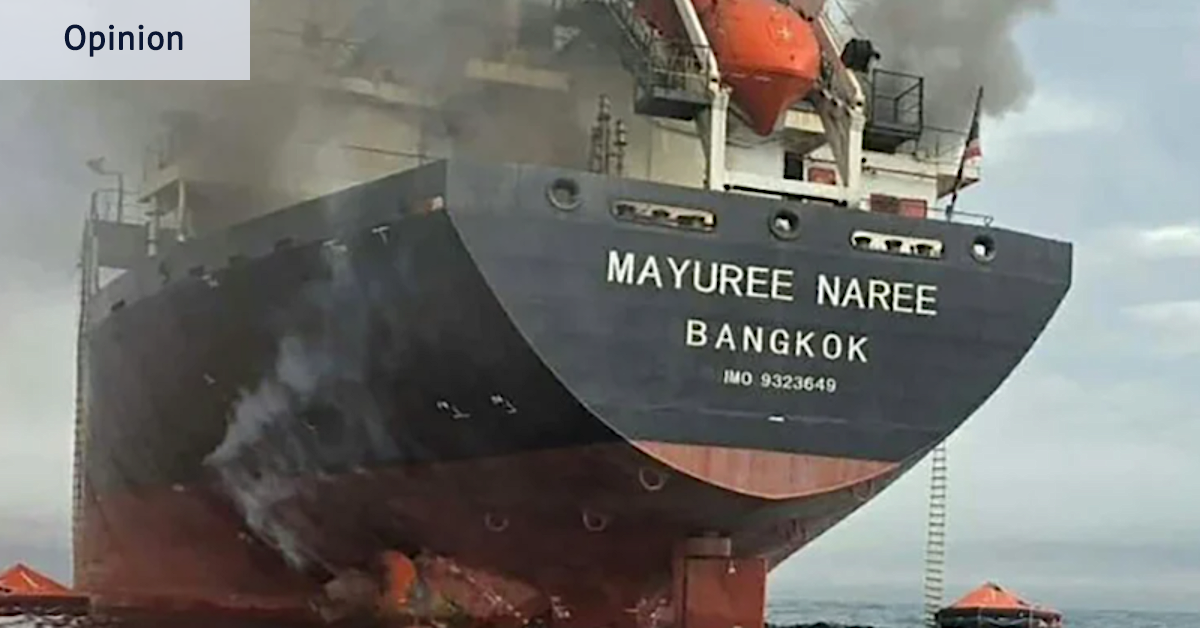
Most Australians would know by now that concerns about global oil supply are, at their core, a maritime problem. The Strait of Hormuz, a narrow body of water between Iran and Oman, carries about 20 per cent of the world’s oil. Despite some reporting, the strait is not closed. But Iran has effectively deterred much of the traffic that would normally pass through it, including about 30 oil tankers and more than 100 other vessels each day.
This disruption has not required large-scale attacks. Iran has struck about 21 ships, but it has been enough to unsettle shipping and drive up risk. It has done this despite the presence of the United States military, because geography is on its side. Iran’s coastline runs along the northern edge of the Arabian Gulf, the Strait of Hormuz and into the Gulf of Oman, giving it a natural advantage.
In maritime security, geography matters. For Australia, as an island nation spanning three oceans, it defines our exposure. Our critical supplies, fuel, fertiliser, pharmaceuticals, plastics and more, all arrive by sea.
In a conflict involving Australia, the challenge is not just a single chokepoint, although some would matter. It is the scale of the maritime domain around us, the distances involved, and the difficulty of protecting trade against capable naval forces. If that were to occur, the impact would go well beyond higher fuel prices. It would mean disruptions to the flow of critical supplies across the economy, with real consequences for how Australians live.
Australia’s ability to protect these seaborne supplies will be critical in any crisis or conflict. That is a demanding task given the scale of our maritime domain and the length of our trade routes. To operate across those distances, Australia needs the right capability. That is why Australia is acquiring nuclear-powered submarines.
There are many advantages to nuclear submarines, but two matter most for Australia. The first is speed. Distance is our defining challenge. A Collins-class submarine takes around eight to 12 days to transit from Perth to Sydney, or to the Sunda Strait, a key route for Australia’s trade through the Indonesian archipelago. A nuclear-powered submarine can do the same in around four to five days. A conventional submarine would also need to raise a snorkel mast multiple times during that transit, increasing the risk of detection. A nuclear-powered submarine does not. Nuclear-powered submarines are not the only capability required, but they are central to operating across the distances that define Australia’s maritime domain.
Australia’s debate on AUKUS is increasingly filled with claims that the program is failing or “headed for a train smash”, as a former submarine commander warned. The three-phase pathway does carry risk, and no one has suggested it will be easy. But much of this criticism is long on assertion and short on analysis or credible alternatives.
The challenges facing AUKUS are real, but are not unique. The US and UK are working through constrained industrial bases, and those same pressures exist across every submarine-producing nation. Walking away would not remove these constraints, it would simply delay capability and deepen the very gap critics warn about.
The risk is real. But in complex defence capability, risk is managed, not avoided. Abandoning it because it is difficult is not a serious option, particularly as, despite alarmist rhetoric, the program remains on track. For Australia, the question is not whether AUKUS is difficult. It is whether there is a more credible way to deliver the reach, endurance and persistence needed to operate across our maritime domain. To date, no alternative has answered that. Calls to cancel AUKUS avoid the harder question of what comes next. They do not solve the problem, they risk leaving Australia without a credible submarine capability for a period of time.
As the war with Iran has shown, it does not take much to disrupt a key maritime corridor.
Australia faces a different geography, but the same logic applies. Our vulnerability is defined by our reliance on seaborne supply, and the distances involved in protecting it. The answer, therefore, is also maritime. It requires the ability to project power across our approaches and protect the flows our economy depends on.
As Australians are seeing, even a limited disruption at sea has immediate consequences at home. As our strategic environment deteriorates, this fuel shock will look minor compared to the economic and security impact of disrupted maritime trade. That is the risk Australia faces. A stronger focus on maritime power, including nuclear-powered submarines, is about ensuring we can protect it. It is also a question of confidence. Australia has built and sustained complex defence capabilities before. There is no reason to assume this one is beyond us.
Jennifer Parker is an adjunct professor with the University of Western Australia Defence and Security Institute and a non-resident fellow at the Lowy Institute. She served for more than 20 years as a warfare officer in the Royal Australian Navy.
 Jennifer Parker is an adjunct professor with the University of Western Australia Defence and Security Institute and a non-resident fellow at the Lowy Institute. She served for more than 20 years as a warfare officer in the Royal Australian Navy.