


Opinion

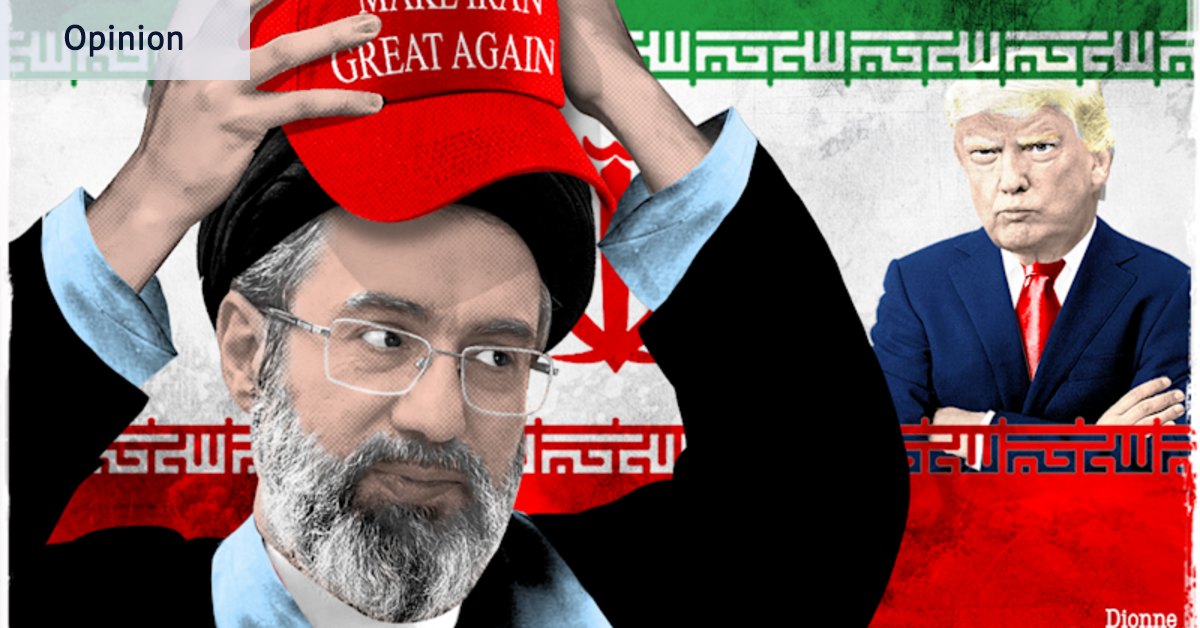
From its very beginning, the Islamic Republic of Iran famously demonised the US as the “Great Satan”. So when the White House last week threatened to “unleash hell”, Iran’s leaders were thoroughly unsurprised. They’d been expecting it. And preparing for decades.
“By the time the current war began, Iran had spent 35 years learning how to fight – and how to survive – against far more powerful adversaries,” writes Middle East expert Narges Bajoghli of Johns Hopkins University School of Advanced International Studies in the journal Foreign Affairs. “Those lessons are visible in Iran’s conduct today.”
What about Donald Trump? He’s been talking about launching war on Iran for just as long. It was 1988 when the future presidential candidate demanded that the US seize Iran’s oil assets.
“Why couldn’t we go in there and take some of their oilfields near the coast?” he asked a Rotary Club event in New Hampshire. On Monday (AEDT) he told the Financial Times: “To be honest with you, my favourite thing is to take the oil in Iran.” His lines are unchanged across the decades.
The question is whether he’s spent any of the intervening years preparing seriously for such a mission or just talking about it. Because, so far, as the Australian strategist and retired major general Mick Ryan puts it, “Iran is much closer to achieving its theory of victory than the US is to achieving theirs.”
“On just about every measure, Donald Trump is failing in his impulse-driven war and Iran is playing for time,” Ryan says. “Both sides are ready to negotiate, but only one side is desperate for it.” And that side, of course, is the US.
At the negotiating table on the weekend, a number of nations were present – Pakistan hosted ministers from Saudi Arabia, Egypt and Turkey. But neither the US, Israel nor Iran were there. The combatants are so far from an actual ceasefire that they are still passing messages through their interlocutors instead.
“For Iran, victory is regime survival,” Ryan tells me. “And they are surviving and will continue to do so, as Israeli and US intelligence agencies have concluded.”
Not that life in Iran is pleasant. Sheltering from a relentless, month-long aerial bombardment that has smashed some 500 schools and 300 medical centres, according to the Red Crescent Society, as well as thousands of military and industrial sites, is terrifying for ordinary Iranians.
Iran’s economy already was in advanced decay even before the first Israeli missile burst into the office of then-supreme leader Ali Khamenei a month ago.
The official inflation rate, the regime announced last week, was 50 per cent for the previous 12 months. That’s a shocking attack on people’s living standards.
Iran has been bracing for the Great Satan and the Little Satan, its pet name for Israel. It manufactures many of its own necessities merely to survive the sanctions it has suffered for decades. Unlike Australia, for instance, it makes its own pharmaceuticals.
It has widely distributed its hundreds of power plants, so the lights remain on. “Supermarket shelves remain stocked, with fresh produce widely available,” according to the Financial Times. Imports continue across its land borders.
Petrol supply has stabilised after earlier shortages. Its oil exports continue because the US allows Tehran to ship oil to help with global supply. In fact, Iran is making more money than ever from its exports. The high oil price means Iran is earning an extra $US140 million a day, according to estimates by the energy data firm Kpler.
In other words, it is successfully operating a survival economy or, as the regime calls it, its “resistance economy”. Iran expert Behnam Taleblu of the Foundation for Defence of Democracies in Washington explains: “That’s why they’re trying to shift this crisis from a political and security crisis to an economic and an energy crisis.”
Because Iran can bear a great deal more economic and energy pain than the US can. This is Iran’s preferred battlefield. “This regime can continue to absorb punishment from America and Israel. It was basically failed state status, even before the 12-day war in 2025,” Taleblu tells me. “The elements of what you and I would consider a successful state don’t necessarily factor into these guys’ calculations.”
Mick Ryan lists a few of the resistance regime’s successes to date: “The US hasn’t changed the regime. It hasn’t taken away the initial capability the regime had to assail Israel, US bases and America’s Gulf Arab partners with missiles and drones.
“The US hasn’t taken away the regime’s intellectual ability to rebirth its nuclear program. At the same time, the Iranians have degraded US alliances in the region” by demonstrating that the US is unable fully to shield its regional friends like the UAE and Saudi Arabia from Iran’s attacks, Ryan said.
“And everyone in the world is paying higher prices for petrol and just about everything else.”
A month into the war, Trump has neither defeated Iran nor found a way to get oil through the Strait. And on the weekend Iran even managed to raise the stakes; its proxy force in Yemen, the Houthi rebel army, entered the war. It had refrained from combat but now has fired a missile at Israel.
The Houthis’ greater power is that they hold a tool for global coercion should they choose to wield it – they have a demonstrated ability to direct fire across the shipping lanes of the Red Sea.
This could shut off another important oil export route that carries 5 to 10 per cent of the global trade, mainly Saudi oil, through the Red Sea’s Bab al-Mandab. Which, portentiously, translates as “gate of grief”.
“It really seems to be a matter of when, not if, this [Iran control over oil exports] forces deeper American involvement to dislodge the regime, particularly as more Marines are entering the region,” concludes Taleblu.
If Trump orders his troops to go ashore to seize the Iranian oil export hub of Kharg Island, this, too, will be just as he prescribed in 1988. The Iranians have been preparing ever since.
Peter Hartcher is international editor.
Get a weekly wrap of views that will challenge, champion and inform your own. Sign up for our Opinion newsletter.
 Peter Hartcher is political editor and international editor of The Sydney Morning Herald and The Age.Connect via email.