


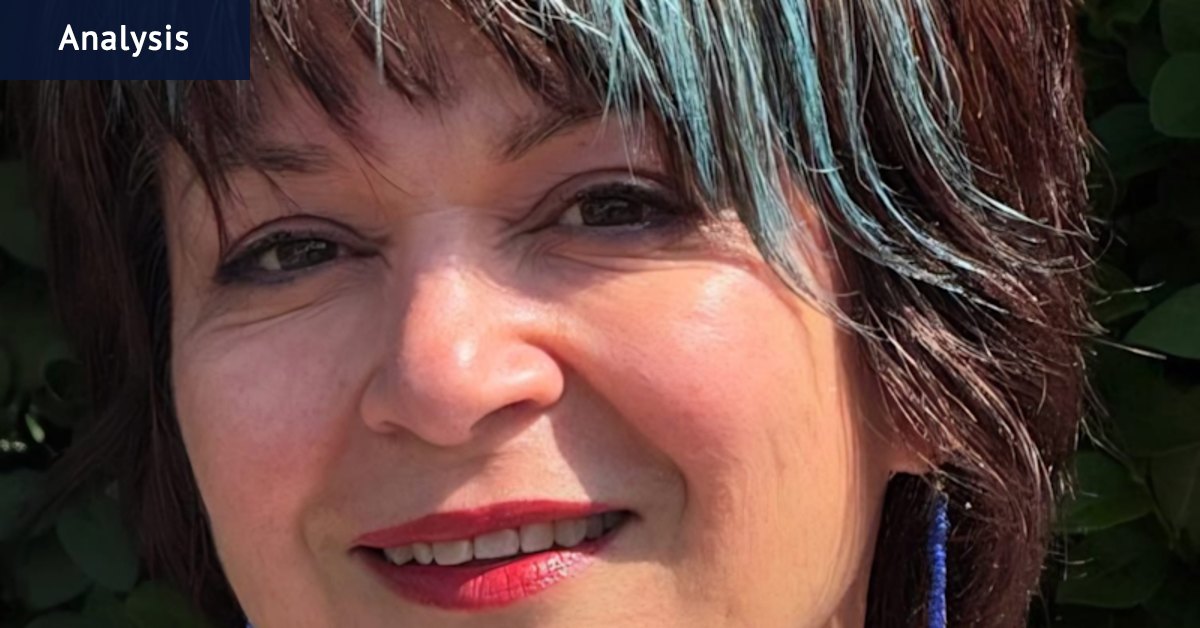

London: We see so much news about the war in the Middle East that it is easy to overlook what is not being described in the daily coverage of Iran. And that makes Shiva Mahbobi angry, because she is worried about the cruelty of the Iranian leaders – and what they might do next in their desperation to retain power.
“People are getting arrested every single day,” she says. “They still get executed, and if normal people dare to come on the street to protest, they will be shot dead.” In all the coverage of the war, she says, the media is overlooking the repression by the regime. “That makes me angry. It’s a completely distorted image of what’s going on in Iran.”
We are speaking in London, a long way from the missiles, but Mahbobi is part of an Iranian community that is enmeshed in the war. Like others in the diaspora, she hopes for messages or phone calls from family and friends inside Iran who can tell her what’s happening. And, like others, she wants this conflict to weaken the regime.
This may be a challenging view for those who totally oppose the airstrikes, but this is a war about Iran – and it makes sense to listen to Iranian voices.
Mahbobi was first arrested at the age of 12 for protesting against the closure of her school in Kurdistan, where she was raised. She was arrested again at the age of 16 and spent three years in prison, where she was tortured. She fled Iran and now lives in London, where she is the spokeswoman for the Campaign to Free Political Prisoners in Iran.
“As a woman, you know, everything is against you in that regime,” she says. “You are a criminal. You have committed an offence by being a woman in Iran.”
‘The regime is not just afraid of the US or Israel. They are petrified of people overthrowing them.’
Shiva Mahbobi, human rights activist
I’m speaking to her after making contact with a range of Iranians in London to hear their views on the war. I’ve spoken to some who believe the US and Israeli attacks will bring only death and chaos. I’ve found more, however, who want to see the end of the Islamic Republic after 47 years of dictatorship. When I went to the public protests on each side of the argument in London on February 28, I found the numbers were emphatically bigger at the march in favour of the war.
While some of the TV coverage from Iran shows people gathering to support the government, Mahbobi says nobody can rely on this footage. After all, hundreds of thousands of protesters marched against the regime in January. At least 6842 were killed by police and other authorities, according to the US-based Human Rights Activists News Agency. Mahbobi believes the death toll was more than 30,000. Right now, she says, nobody can assemble in the street to say what they really think.
“There is a regime operating inside Iran with fear: attacking people, arresting people, executing people, even at the time of the war,” she says. “I would say 99.9 per cent of people want the regime to go. That’s especially after the January protests. With the complexity of Iran, we need to understand that the regime is not just afraid of the US or Israel. They are petrified of people overthrowing them.”
There has been no uprising, of course. US President Donald Trump seemed to think his airstrikes would galvanise a popular movement to tear down the regime, only to find the clerics and their enforcers, like the Islamic Revolutionary Guard Corps, were deeply entrenched. Mahbobi says there is not enough attention on the repression that makes this possible, such as the treatment of political prisoners: “They are left starving, without food, clean water or medication at all.”
Will there be regime change? “The public will is there,” she says. “But I don’t think regime change happens just by the attacks from Israel and the US.” While many in the Iranian diaspora see Reza Pahlavi, the son of the former Shah, as the natural leader to replace the ayatollahs, he has spent the past 47 years in exile. There’s no consensus on how to replace the regime.
“In my view, Reza Pahlavi has no place in Iran,” says Mahbobi. “We actually have so many leaders inside the prisons – people who are able to become part of a government. To me, most of those leaders are inside Iran.” She spoke to the United Nations human rights committee in Geneva on March 16 about the need to help these leaders. She wants Western governments to expel Iranian diplomats and to list the IRGC as a terrorist organisation, as Australia has done.
What worries her is not just the harm to civilians from the war, but the risk of a deal that leaves the regime in place. This is the Venezuela model, where Trump swaps leaders and claims victory. “I believe that if any part of the regime is left, they’re going to take such a revenge on people that the situation would be worse.”
This is why she is wary of Trump and Israeli Prime Minister Benjamin Netanyahu, even though she wants to see the Islamic Republic under attack. She worries that when the US and Israeli leaders feel their interests have been met, they may be willing to accept a repressive leader in Tehran.
“Ideally, people will come out on the street and overthrow the regime,” she says. “But it is complicated, because when there is a bombing going on, that’s not possible.” It is easy for foreign leaders to call for an uprising, of course. The fact is that some Iranians will pay with their lives if they protest.
I did not expect any easy answers when I got in touch with Mahbobi, and I did not get any. But this is a war where almost all the talking is done outside the country at the heart of the conflict – and, for me, that makes it even more important to hear from the people of Iran. Even if they have to live a long way from home.
Get a note directly from our foreign correspondents on what’s making headlines around the world. Sign up for our weekly What in the World newsletter.
 David Crowe is Europe correspondent for The Sydney Morning Herald and The Age.Connect via X or email.