



Parental contributions are causing a “moral dilemma” at some government schools, as fewer than half of families pay the voluntary fee despite it increasingly being used for services such as first aid and maintenance.
The contributions across the state declined by $35 million between 2020 and 2022 after the state government cracked down on schools that were sending reminder letters and not making it explicit the contributions were voluntary.
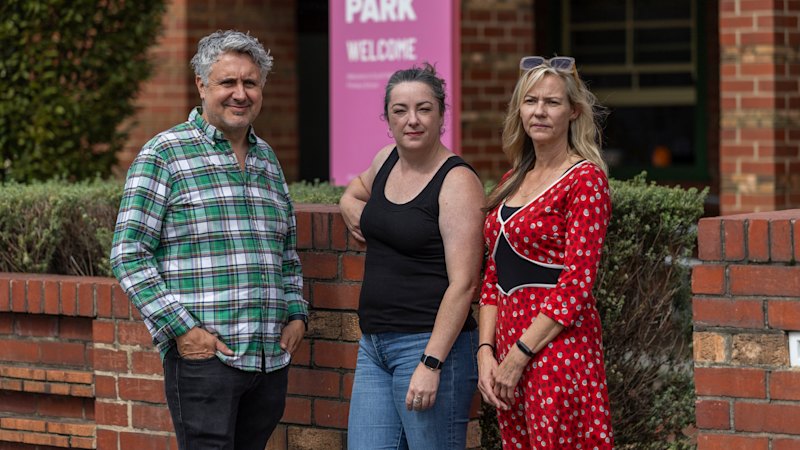
At South Melbourne Park Primary School, which opened in 2019, parents are asked to contribute $990 per child to cover basics including stationery, online subscriptions, wellbeing programs, part-time maintenance staff, and first aid suppliessuch as Band-Aids and vomit bags. But only about 30 per cent of parents pay the contribution.
School council president Katrina Walker says some parents pay more than what is asked for, raising the income to about half of the total the school would receive if every parent contributed. She acknowledges not all parents can afford to pay, but also points out the school has a high socioeconomic profile and some of the money goes directly towards supporting students who are disadvantaged.
“In the last year or so, I’ve felt like it’s my job to say, ‘Although we are told to say you don’t have to, we actually really do need your help.’
“I don’t want to make families who can’t pay feel bad. But I do want those who can to know. It creates a moral dilemma.
“It doesn’t really fit with the public education mantra. Every child should have access to a great education. But if we can give a little more and our kids get some advantages – not to the level of a private school – then we should be able to do that given the profile of the attendees.”
The pressure over parental contributions comes as schools wrestle with wider funding limitations. The state government’s recurrent spending fell to $20,125 per student in 2023-24 – $428 less than the previous year, according to the Productivity Commission.
The Victorian government has pushed back to 2031 a commitment it made in 2019 to fund 75 per cent of the Schooling Resource Standard (SRS) by 2028, leaving a $2.4 billion shortfall. The federal government is to pay the remaining 25 per cent. A parliamentary inquiry into the shortfall is currently hearing from parents, teachers, and advocates.
Victorian parents, meanwhile, are being asked to contribute $620 on average towards their child’s government school education – the second-highest amount nationally, after South Australia.
St Kilda Park Primary School asks parents for between $860 and $970 depending on their child’s grade. About 70 per cent of parents pay the contribution, but school council president Elisa Webb says it’s disappointing the money is required for basics such as medical supplies.
A receptionist was trained to provide first aid to students, but this became unsustainable and the school was required to ask parents for further contributions to cover a school nurse.
“The first aid contribution really gets me. So many kids have anaphylaxis, or they have asthma, or epilepsy, or they require ADHD medication at whatever time of the day, and it was being handled by the office manager, and she has an actual job,” Webb says.
“We have to ask for these contributions. And I think we’re at the point that families have accepted they have to cover the basics. And now it’s being pushed out to the point where they are covering things beyond that as well.”
Parents Victoria chief executive Gail McHardy says parents should not be required to cover costs like grounds maintenance, first aid or student health support.
“Just as we don’t expect families to fund basic medical supplies in public hospitals, these are core responsibilities that should be met through government funding – not shifted onto parents. Fully funded public schools would mean schools would not have to ask for such things.”
She said parental contributions should be strictly voluntary and schools should seek them in a transparent, non-pressured way. However, she added, there should be greater consistency and clarity between schools to separate contributions from essential curriculum delivery.
“Victoria’s public education system is built on the principle that every child can access a quality education, regardless of their family’s financial situation. Voluntary contributions can enhance that experience – but they must never become a barrier.”
An Education Department spokesperson said parental contributions were entirely voluntary.
“We know families are doing it tough right now, which is why we’re helping with $400 camps, sports and excursions fund payments, school breakfast clubs, affordable school uniforms, glasses for kids, free swimming lessons, free pads and tampons, free dental check-ups and free public transport for kids.”
The Morning Edition newsletter is our guide to the day’s most important and interesting stories, analysis and insights. Sign up here.
 Jackson Graham is an education reporter at The Age. He was previously an explainer reporter.Connect via email.