



Last week, Atlassian cut 1600 jobs globally, blaming AI. Late last year, University of NSW student Ahnaf Rakeen changed his degree from a Bachelor of Design to a Bachelor of Architectural Studies. His freelance graphic designer work had become less creative and begun to dry up due to clients using AI themselves.
“I realised that this is not going to be worth my time to study in university … it’s already this bad, imagine after my degree is completed, I would not be needed at all,” says 19-year-old Rakeen.
“AI can’t just go in person and measure parts in buildings and draw everything to scale,” Rakeen says of his switch to architecture in November. “I feel like that’s something that will take a lot more time … for AI to be able to do.”
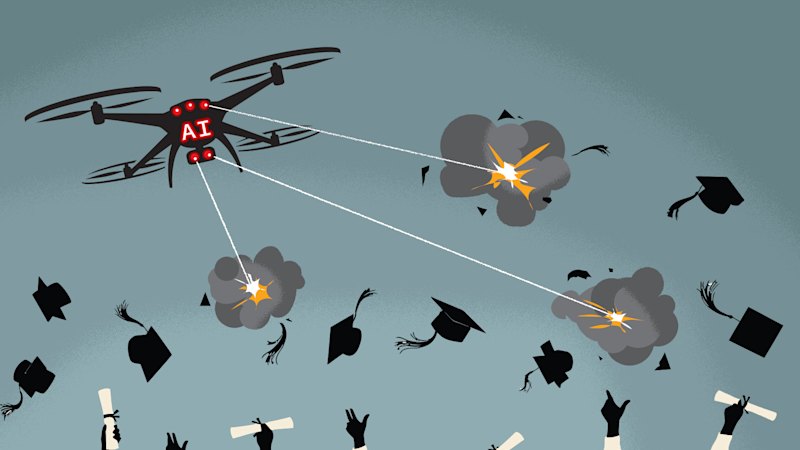
An AI-induced wave of disruption is tearing through Australia’s white-collar workforce, and not everyone has been lucky enough to get ahead of it like Rakeen.
Before Atlassian’s recent job cuts, Afterpay’s parent company Block slashed more than 4000 jobs, WiseTech axed 2000, and Amazon slashed 16,000. Salesforce, Pinterest and CrowdStrike have also joined in on the bloodletting.
Most of the casualties have been in tech, which University of Sydney Business School Professor Clinton Free says demonstrates the case that “yesterday’s growth occupations are not automatically tomorrow’s safe occupations”.
Technology-related roles were among the fastest-growing occupations in Australia from November 2020 to November 2025, and are, according to a report published by American artificial intelligence company Anthropic earlier this month, among the top occupations heavily exposed to AI disruption.
The scope of this disruption is, currently, something we will only be able to understand in hindsight. As Free puts it: “The technology is moving faster than the official labour statistics.”
“We’re still very much in the early stages of this transformation,” Indeed Australia senior economist Callam Pickering echoes. “A lot of what we say about AI is speculative.”
What compounds the confusion is this: short-term storylines, for many reasons, are not lining up with long-term forecasts. Australia’s Commonwealth Bank, for example, had to reverse its decision to replace 45 call centre jobs with AI chatbots last year, after the move backfired and increased call volumes.
Teachers, tradies, aged care and healthcare roles are among the top occupations projected to grow by 2050, as are cleaners and hospitality workers. But according to data from the Australian Bureau of Statistics, the latter two were among the top 10 fastest-shrinking occupations between November 2024 and November 2025.
“We don’t truly know how this is going to play out,” adds Pickering. How can we ask future white-collar workers to choose which career path to follow in this uncertainty?
How the emerging white-collar workforce is preparing for AI armageddon
Dr Janine Dixon, who is the director of the Centre of Policy Studies at Victoria University, helped model the labour market impact of generative AI for Jobs and Skills Australia. The final report, released in September, showed there was “absolutely no occupation that was completely immune from AI”.
That does not mean workers – white-collar or otherwise – should panic. Dixon’s simulation found augmentation – people working with AI – was “by far the more widespread and larger effect” than automation, which is when AI “does your job, and you don’t have a job any more.”
“The best way you can future-proof yourself is to know how to use [AI],” says Dixon. “Otherwise, you’re going to be a disadvantage relative to the people who do know how to use it.”
University graduates that will be more in demand for employers, careers consultant Helen Green says, are those who can demonstrate they are embracing technology.
Last year was when Green, who is the director of Melbourne firm Career Confident, noticed year 12 students and parents were becoming increasingly concerned about the impact of AI on their employment opportunities, particularly as the cost of tertiary qualifications increase.
But Green warns students against pursuing a degree in a field they’re not passionate about because it’s expected to grow in the age of AI; that path often leads to unfinished diplomas and a mountain of student debt.
“Half the careers they’ll be working in haven’t been invented yet,” says Green. She emphasises developing transferable skills – human skills – that AI doesn’t have: communication, creativity, and critical thinking. “Young people who are adaptable and have good people skills will always find work.”
That mentality is something Justin Peat, head of futures at Melbourne’s St Leonard’s College, is instilling in his students with seminars, where industry professionals from multiple sectors reflect on their careers.
At first, Peat says the speakers focused on their unpredictable career journeys – and how their “distinctly human capabilities” such as resilience, curiosity and ethical judgement steered them – to show students they “shouldn’t anticipate a linear, predictable pathway” after graduating high school, and how to prepare for it.
In the past two years, however, speakers have been asked to respond to specific questions about the impact of AI on their particular sector.
“These industry leaders themselves are a little bit unsure of what the future brings, but that honesty in and around the discussion just highlights the need to be comfortable with uncertainty,” says Peat.
Third-year civil and humanitarian engineering student Rifah Tamanna is already seeing the value of that practice. Instead of focusing on coding, which she’s “not the best at”, she can outsource that to generative AI and focus on the aspects of the job she’s most passionate about: working with people and communities.
“AI can’t go abroad to a developing country and ask the people what they actually lack … you have to go to the place and analyse how the people work, how the people live, to give them a solution,” says Tamanna.
“AI can give you a solution to the maths problem, but if you can’t come up with the problem in the first place, or define the problem properly in the first place, it’s really hard to actually come up with a solution that’s going to work, that’s going to stick.”
The Morning Edition newsletter is our guide to the day’s most important and interesting stories, analysis and insights. Sign up here.
 Bronte Gossling is a reporter for The Sydney Morning Herald, The Age, WAtoday and Brisbane Times.Connect via email.