


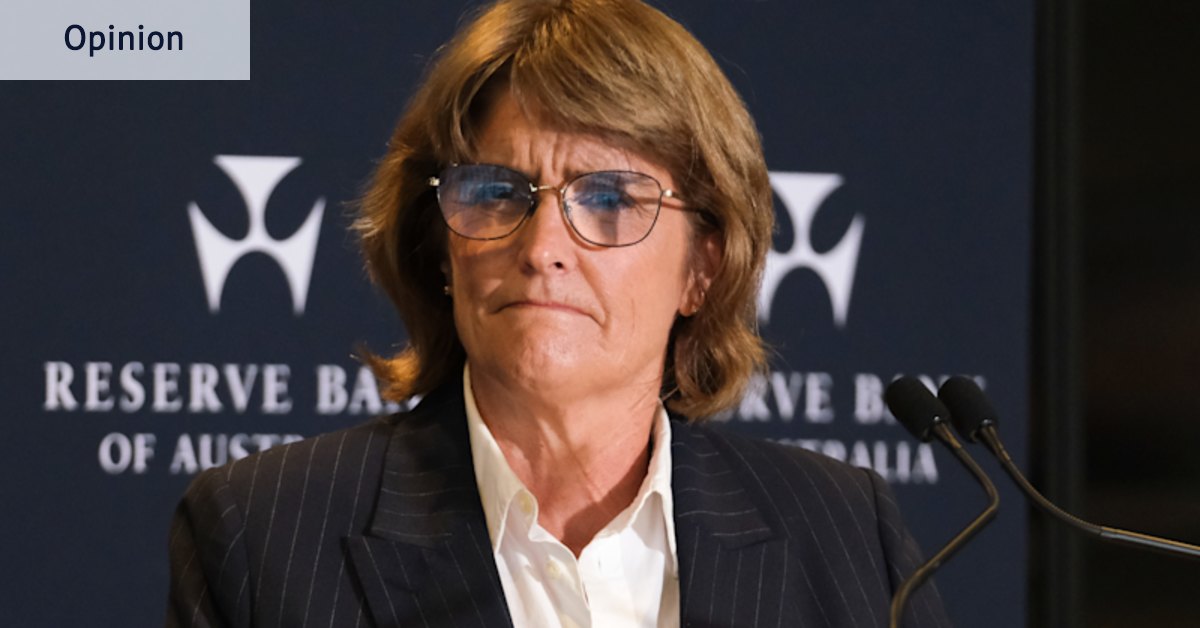
It’s not the Reserve Bank’s fault that interest rate rises hurt – or that they seem to cause more pain than gain for some people.
Really, the bank is just trying to do what they’re told: worry about the economy as a whole, not individual people or groups, and keep inflation in check. Plus, they’re working with a tool that’s not only blunt, but double-edged: making some people richer while putting others between a rock and a hard place.
It’s like giving a toddler – or anyone for that matter – a wrecking ball, and telling them to fix a crumbling tower. They might get rid of the problem by demolishing the building entirely, but that may not leave us much better off.
This week, the Reserve Bank lifted interest rates. Why? Because it needs to get inflation – or price rises – back within its 2 to 3 per cent target range.
The problem is that interest rates right now, despite being “tight” – meaning they’re meant to be pushing inflation lower – are not really working as well as the bank thought.
Even assuming interest rates keep rising past 4 per cent by the end of the year, the bank now thinks inflation won’t come back to a comfortable level (somewhere around the middle of its 2 to 3 per cent target range) until at least June 2028 … that’s more than two years down the track.
We know inflation affects everyone, and especially lower-income households which have less spare money to tap into when prices rise. But these people also cop the brunt of interest rate rises.
The clearest impact, of course, is on people with large home loans. As interest rates rise, so do the repayments on their home loans, meaning they have less money to spend on other things, dampening overall demand in the economy and therefore reducing price growth.
But interest rates can also be a drag for the one-third of Australians who rent. Why? Because landlords and real estate agents are often eager to push up rents when interest rates go up, saying they need to do this to cover higher mortgage repayments. And when interest rates go down? Crickets…
While research from the Reserve Bank last year suggests there’s only a tiny direct passing-through of interest rate costs to rents (about a 1 cent increase in rents for every dollar increase in interest payments), they conclude that it’s the balance between demand and supply for housing that is the key driver of rent increases.
Basically, if the shortage of housing in Australia wasn’t so bad, landlords wouldn’t be able to pass on interest costs as easily to renters. As data on rent increases over the past few years show, landlords have been able to hike rents by quite a bit more than 1 cent for every dollar increase in their interest payments – probably because of our extremely low vacancy rates (the share of empty properties) over the past few years.
When there’s a shortage of something – and especially when it’s a necessity like shelter – it’s much easier for suppliers (in this case, landlords) to raise the prices they charge and to refuse to lower them even when they could – or should.
While we might be outraged and boycott buying chocolate – or choose a cheaper treat – when its price rises too much, it’s very hard to do the same when it comes to housing. Not only is shelter something we need, but the moving costs and stress of moving and finding another home are often enough to force renters to continue paying up – even if it means they have to cut back on other necessities such as food.
So, while higher interest rates drive down demand for most things, there are some things they have little effect on. Since rents make up more than 5 per cent of the consumer price index (our main measure of inflation), as long as our housing shortage continues, higher interest rates might just leave renters worse off.
Meanwhile, those who have paid off their home loans, and those with a lot of cash stashed away in the bank, either feel little to no impact or end up getting wealthier if their savings accounts grow.
The conventional thinking is that higher interest rates means these people will be incentivised to save more rather than spend because they have more to gain. That’s probably true. But it’s also possible that for some, seeing their bank balances grow means they’ll feel happy to splurge.
Indeed, for the past few years, lower-income households and those with big home loans have cut back their spending – especially on things like holidays and restaurant meals which aren’t strictly necessary – but higher-income and wealthier people have tended to continue lifting their spending.
As the wealth divide has grown in Australia it’s possible that those with large amounts of wealth have become less sensitive to interest rate increases. There’s less to worry about when the money you’re gaining or losing isn’t a matter of life or death.
That’s not to say interest rates don’t work any more against inflation.
As Westpac chief economist (and former Reserve Bank assistant governor) Luci Ellis points out, one of the main ways interest rates help to dampen inflation is through the effect they have on exchange rates.
When interest rates go up (relative to interest rates overseas), it becomes more attractive for investors (both here and overseas) to park their money in Australian assets, pushing up demand for our currency and therefore its value relative to other currencies. That makes our exports more expensive for overseas buyers, slowing down our economy and therefore price growth. It also makes imports – such as electronics, cars and off-season fruits – cheaper, meaning Australians end up paying lower prices for these goods, helping to tame inflation.
But at the very least, we have ended up with a system where interest rates – the very tool meant to relieve cost of living pressures – disproportionately hit people who are already struggling.
Rather than relying on the Reserve Bank to do the heavy lifting, squeezing households with little room to move and slowing down the economy, more needs to be done by the government which has a much wider range of tools at its disposal.
As University of Melbourne labour market expert Jeff Borland says, one of the main issues confronting the country is a lack of productivity growth: we’re not getting much better at making things or providing services that we want and need.
Without fixing this, there’s not much room to grow the economy or our wages without the Reserve Bank getting concerned we might put pressure on inflation. But the solutions – from tax reform to building more houses – requires an appetite for change from voters and politicians.
As long as we’re lazily relying on the Reserve Bank, we’ll end up worsening inequality and keeping ourselves stuck in a crumbling building with a wrecking ball to reckon with.
The Business Briefing newsletter delivers major stories, exclusive coverage and expert opinion. Sign up to get it every weekday morning.
 Millie Muroi is the economics writer at The Sydney Morning Herald and The Age. She was formerly an economics correspondent based in Canberra’s Press Gallery and the banking writer based in Sydney.Connect via X or email.