


There is a contradiction at the heart of Trump’s demands, and it all comes back to the weather. Trump dismisses the science about climate change: “It’s the greatest con job ever perpetrated on the world,” he told the United Nations last September. At the same time, his ideas turn in part on the way global warming changes the future of Greenland.
When the Americans worry about Russian and Chinese ships in these northern waters, the climate is part of their calculations. “Climate change has opened vast areas of the Arctic to surface ships,” said an analysis from the US Department of Defence, now the Department of War, more than six years ago. Trump was president at the time.
Loading
The US response, however, has been to leave its military operations in Greenland largely unchanged. The major US base at Pituffik, previously known as Thule, is estimated to have about 150 personnel. Technology has replaced people at this remote base to detect missiles, but there is no public plan to scale up the military facilities.
The climate is also a factor in the White House talk about extracting critical minerals in Greenland and countering China’s control of these commodities. If the ice sheet melts, mining becomes more commercial – in theory, at least. In fact, the scale and timing of the commercial shift is uncertain.
The greater concern is the impact on the people of Greenland and the world. The island’s ice sheet is 1.2 metres thinner, on average, than it was in 2010, according to NASA and the European Space Agency. They calculate this has melted as much water as is stored in Lake Victoria in Africa.
One man in Nuuk, who was raised in a small community on the western coast, tells me the winter ice used to be two metres thick in his village. These days, he says, it can be less than a metre. This is anecdotal, but it tallies with the science.
No wonder Greenlanders are so anxious about Trump. He brings more uncertainty to their world when they are worried about the climate.
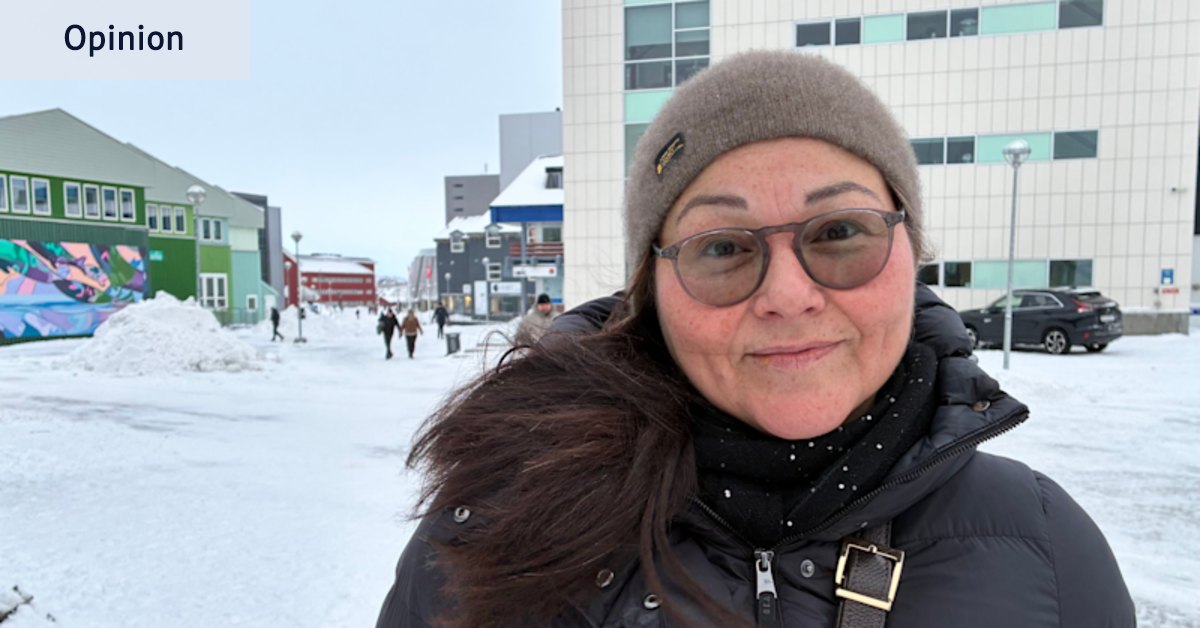
One Nuuk local, Julia Pars, a business consultant, tells me some people say they can’t sleep at night because they think about the US invading their territory. Pars shares the concerns, but she separates the anxiety about Trump from the security pact with America. Like others I spoke to, she has no problem with the US president sending more military forces into Greenland under the 1951 defence pact that has been updated to reflect the territory’s autonomous government.

Julia Pars, a business consultant in Nuuk, on Sunday.Credit: David Crowe
“Of course I’m OK with that,” Pars tells me. “Because it’s part of the agreement we have had for so long with the United States and with NATO, and it’s been a good idea. I believe in the institutions and agreements made after the Second World War, and I believe they’re important still.”
This is not an unusual response when I speak to people in Nuuk, and it is also the view of the major political leaders here. They seem to believe in the US alliance, and the unity of Western democracies, more than the US president. I do not hear objections to hosting more US forces in Greenland.
Loading
Trump seems intent on dividing NATO over this land. The Greenlanders would rather stick together.
It is not hard to see what Trump should do if he is serious about the strategic importance of Greenland. He could expand the US missile defence and naval facilities. He could build more US submarines, more quickly, to patrol the northern Atlantic. He could also do everything possible to make AUKUS happen because Britain needs the new submarine fleet if it is to dominate the gap between Greenland, Iceland and itself – the gap that Russian submarines slip through to approach the Americas.
Most of all, Trump could strengthen NATO. The US, Canada and Europe all need Greenland. Sooner or later, this strategic reality will dictate the decisions.
The wind is still roaring through Nuuk after sunset, but the Greenlanders seem unflustered. Parents tow their toddlers along the street in small plastic sleighs. Friends emerge from cafes and walk in the chilly air to their cars. It is a harsh environment, especially in the middle of winter, and the Greenlanders know how to tough it out.
They may be worried about Trump. But they will survive him.
David Crowe is Europe correspondent for The Sydney Morning Herald and The Age.
Get a note directly from our foreign correspondents on what’s making headlines around the world. Sign up for our weekly What in the World newsletter.
