


Try as he might, Trump is failing to win the hearts and minds he needs to have any lasting success in Greenland. This former Danish colony, proud of its Inuit heritage, has its own parliament and government. Its people want their say when world leaders argue over their land.
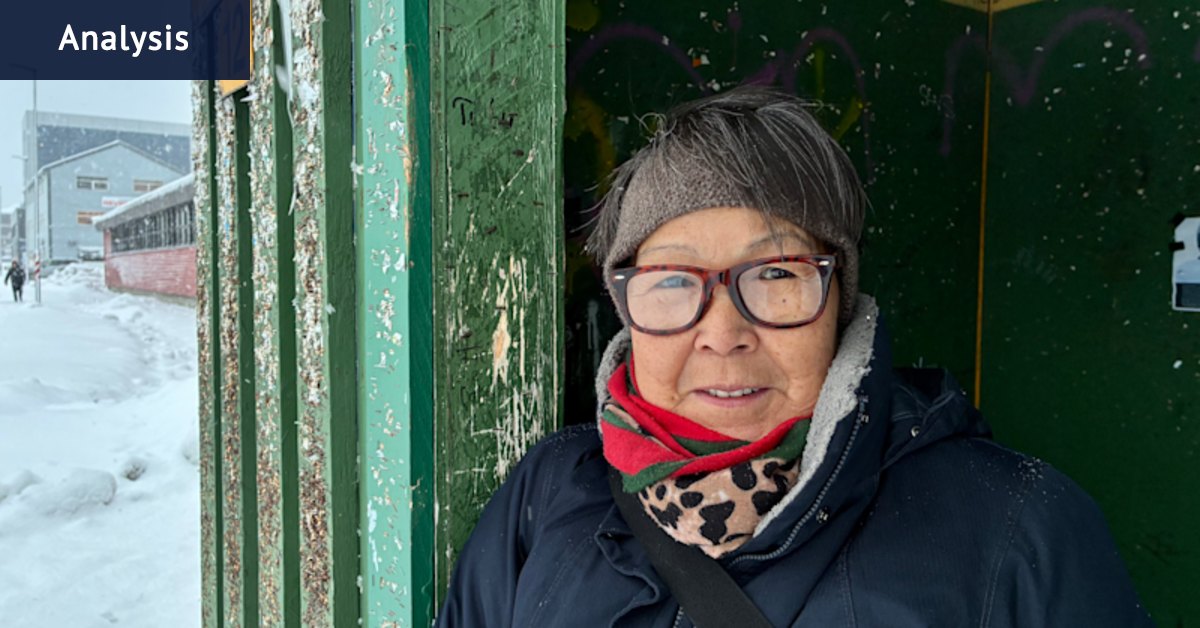
Søholm, speaking to this masthead at a bus stop, says Trump seems to want the land but does not care about the people.
“He should take care of his own people,” she says. “There are so many homeless and so many poor people in America. So why Greenland?”
Around the corner, outside one of the supermarkets, a giant screen displays world news, including the latest remarks on Greenland. This is a remote community, but not an isolated one. Some are worried about the idea that Trump might use force.
“I hate Trump with my whole being,” says Aviaq Fontain Markussen, 18, a grocery store worker.
“We all hate this. We don’t want him to buy Greenland or be our president.”

Grocery store worker Aviaq Fontain Markussen, 18, in Nuuk.Credit: David Crowe
“We want Greenland to be Greenland, and not be bought. Our life was peaceful. We want it to be simple and peaceful, just like how it is.”
The resistance is so strong that money alone seems unlikely to clinch an agreement.
“Many people won’t agree. I won’t,” says Carl Petersen, a retiree in Nuuk. “Even if you offer $500,000 each, or $1 million, we don’t want their money. We want to be free.”
Loading
Money can change minds, of course. There are about 57,000 people in Greenland. Reuters reported on Thursday that White House officials were canvassing an offer worth anywhere from $US10,000 to $US100,000 a person to gain control. At the top end of that range, the bill would come to $US5.7 billion (about $8.5 billion).
The idea of the US controlling Greenland is not new. America discussed buying it from Denmark in 1867 and made a secret offer in 1946, revealed decades later.
Trump, however, has turned the issue into a signature cause. He complained last week that Russian and Chinese ships were “all over the place” around Greenland. In his first term as president, he emphasised the commercial gain from buying it.
“Essentially, it’s a large real estate deal,” he said in 2019. White House officials have talked about gaining access to Greenland’s critical minerals, which the US needs for technology and defence.
Then there is the populist appeal of gaining space on a map. If Trump added Greenland to the US, he would expand the country by 2.16 million square kilometres. This would narrowly surpass the Louisiana Purchase of 1803, which added about 2.14 million square kilometres, and the purchase of Alaska in 1867 at 1.7 million square kilometres.
In the 1800s, of course, national leaders traded land without regard to their people. Native Americans had no say when France gave up its claims in America, nor the Inuit and others of Alaska when the Russian tsar needed money.
So what do Greenlanders want? When they were asked a year ago, 85 per cent opposed joining the US. The poll, funded by Danish and Greenlandic newspapers, found only 6 per cent were in favour.
Danish Prime Minister Mette Frederiksen and Greenland Prime Minister Jens-Frederik Nielsen both repudiate Trump’s ambitions, knowing popular will is on their side.
Talks continue, with US Secretary of State Marco Rubio expected to meet Danish Foreign Minister Lars Løkke Rasmussen in Washington in the coming days, but there is no sign this will lead to American control of the territory.

Susan Bech hopes Greenland will one day be independent.Credit: David Crowe
The people of Nuuk do not believe Greenland’s future is for others to decide.
“We’re trying to be independent,” says Susan Bech, another resident, speaking to this masthead on one of the main streets.
“I hope we’ll be independent one day.”
The five political parties in the Greenland parliament all convey that message. In a rare joint statement, issued on Friday night in Nuuk (about 9am on Saturday, AEDT) they commit to cooperating with the US and western nations, but they ask the US to end its “disrespect” for their country.
They say their future is for the Greenlandic people to decide: “We will not be Americans, we will not be Danes, we are Greenlanders.”
Get a note directly from our foreign correspondents on what’s making headlines around the world. Sign up for our weekly What in the World newsletter.
