


As competition hots up, it can trigger a race to the bottom, with manufacturers engaging in aggressive price-cutting to boost profits and keep shareholders happy.
Loading
The theory goes that as corners are cut to keep down costs, quality inevitably suffers.
British shoemaker Dr Martens, for example, faced a flood of accusations about the falling durability of its famously hardy footwear since it outsourced 98 per cent of its production to Asia, where labour is much cheaper than in the UK.
But is the standard of workmanship abroad to blame? Veldhuizen thinks not.
“China makes what you ask them to make. If you ask them for a high-quality product, you will get a high-quality product. If you ask them for a cheap, low-quality product, that’s what you will get.”
Instead, he believes that competition between companies has pushed them into making straightforward goods overly complex.
Manufacturers, he says, have started adding bells and whistles to appeal to gadget-loving consumers. These ultimately make products more susceptible to breakage and difficult to fix.
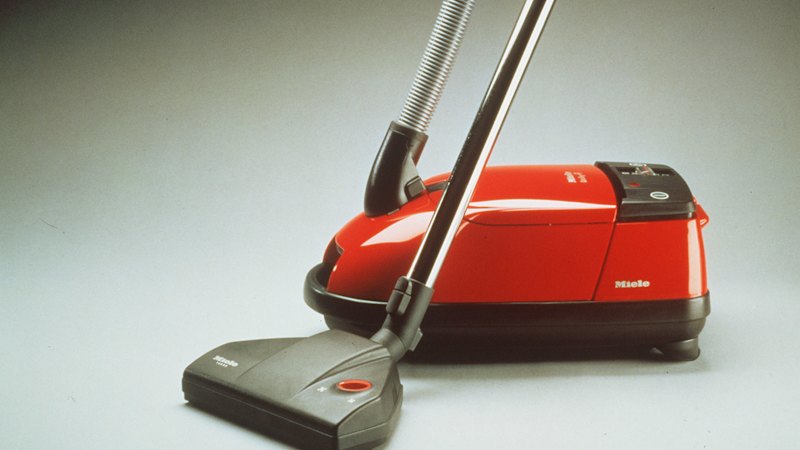
On vacuum cleaners, for instance, it is an electrical add-on, such as suction control, that fails after a couple of years of use in the vast majority of cases. “But you don’t need electronic suction control – it’s a gimmick that companies use to differentiate themselves.”
Fixing electronic components demands a level of expertise beyond most ordinary appliance users.
But even getting into the device in the first place is harder than it used to be.
“Whereas in the good old days parts were readily available and there were a couple of regular screws that you could open up to fix the appliance, clean it and close it up again, it’s becoming a lot more difficult.”
Planned obsolescence
Because many goods are produced in countries where labour is relatively cheap, the cost of repairing it domestically is often more expensive than buying new – and therefore the product is thrown out and replaced.
Cynics are quick to suggest this is all done on purpose as part of a grand plan by manufacturers to encourage us to replace products more frequently – a theory known as “planned obsolescence”.
One of the earliest known examples involved lightbulb makers in the mid-1920s. After technological advancements improved the lifespan of the bulb to 2,500 hours, manufacturers realised they “lasted too long”.
In response, the world’s leading makers, including Germany’s Osram, the UK’s Associated Electrical Industries and General Electric in America, colluded to intentionally reduce the lifespan of bulbs by 50 per cent and thereby stimulate repeat purchases.
However, Kamila Krych, a researcher at the Institute of Environmental Engineering in Zurich, who studied the lifetime of common household appliances for her PhD, is sceptical of arguments around planned obsolescence.
“If it was the case that producers were scheming against us to make things less durable, I would expect all products to go down in lifetime at a more or less similar rate. And this is not what we see,” she says.
Rising living standards
In her study, Krych investigated how the sales and ownership of large household appliances in Norway had evolved since the 1940s.
Although the lifespans of fridges, freezers and dishwashers have remained relatively constant, she found that the longevity of ovens and washing machines plummeted in the 1990s and early 2000s.

The lifespan of washing machines has plummeted. Is it bedcause we use them more these days?
Washing machines dropped from 19.2 to 10.6 years, while ovens fell from 23.6 to 14.3 years.
Krych acknowledges that a flood of cheaper products around the turn of the century undoubtedly had a bearing on the quality of household appliances. But her conclusion also stressed the impact of consumer behaviour.
Loading
“There is a social component to it, not just technical. For example, with washing machines there is clear evidence pointing towards people doing laundry more often. If you run more cycles per year, your washing machine will last fewer years.”
The average Norwegian family, for example, ran two washing cycles per week in 1960 compared with eight in 2000 – a symptom of rising living standards, Krych adds.
Most consumers are also notoriously lazy when it comes to essential maintenance of products, which only accelerates products’ decline.
“For cars, regular maintenance is very common and normal for most people,” Veldhuizen says. “But for household appliances, people expect them to run forever without any maintenance. I have a friend who has a coffee machine with an LED that indicates when it needs descaling that’s been flashing for four months.”
Informed consumers
How, then, can we pull ourselves out of this rut of throwaway culture?
Wayne Hubbard, of ReLondon, a waste reduction initiative, wants to see more consumers taking an interest in not only the quality of the products they are buying but how to repair them.
“A little bit of knowledge can go a long way,” he says. “It also makes us savvier shoppers in the long run.”
Top-down legislation that gives consumers the ability to make more informed purchasing decisions is also a popular solution.
Loading
France has led the way with its “Repair Index”, added to electrical products since 2021, which scores them on their “repairability”. The idea is twofold: to encourage consumers to choose goods they can repair and for manufacturers to make them easier to fix.
It’s a measure Veldhuizen supports – but he says we cannot ignore the fact that fundamental cultural shifts have changed the dynamic between people and products, possibly for good.
“In the 1950s and ’60s, everything was scarce, everything was in short supply and expensive. You had to make do with your things for as long as possible.
“Now, things have become cheap. We have more money than our parents.”
For better or worse, he concedes, the days of sewing up holes in socks are probably over.
The Telegraph, London
