


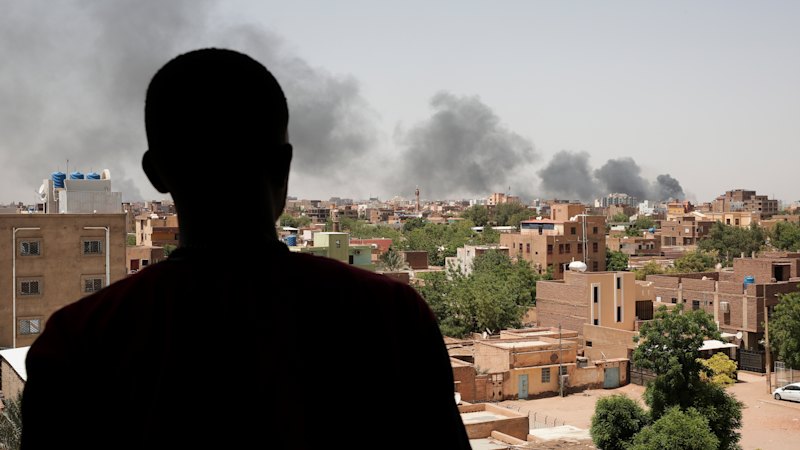
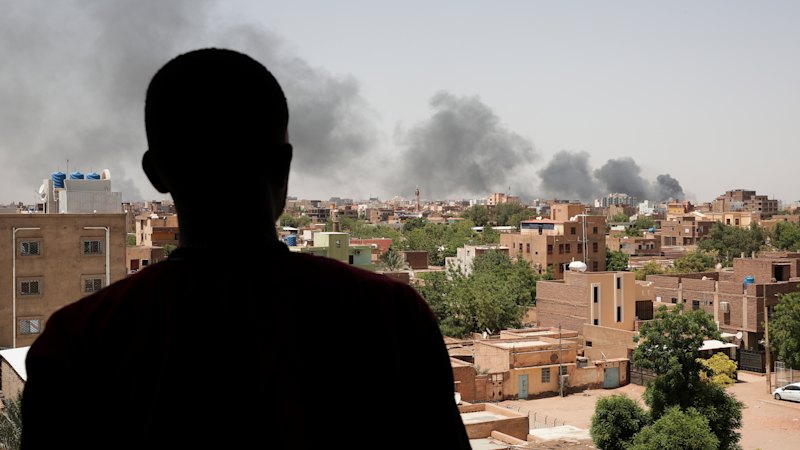
And really, in the long term, the only thing that can really save Sudan or stop this endless cycle of violence is some form of like a liberal peace agreement.
Applebaum: I mean, maybe democracy is too strong a word, but you would need to create a system where people have rights, where there’s rule of law, where people can compete in some kind of market to produce goods, and where there is some sense of fairness and justice … this wasn’t someone who was influenced by the United States … They weren’t reading the Declaration of Independence. This was the conclusion they came to living in the society that they were in. It was an argument for democratic, or liberal democratic solutions, of a kind that you would have heard 300 years ago at the time when democracy was first being invented.
Selinger-Morris: You write that this is what the end of the liberal world order looks like, but you write that the same forces that have destroyed Sudan are coming for other countries too. So is this something you see for other parts of the world?
Applebaum: So Sudan is a country that fell apart very fast. I met a young man in his 20s, another person who I found very moving to speak to, who was about to start university studying graphic design at the time the civil war broke out, and literally, like from one day to the next, he lost his future … lost it overnight. And it happened very fast.
Loading
And these huge displacements of people, enormous refugee camps, emerged from one day to the next. And so the breakdown of civilisation can take place quite quickly.
I mean, once people set out to destroy the state, once there’s a determined group of armed people who want to end the political system as it exists, they can. They can do it very fast.
And of course, I mean, when I wrote that, I mean, I was thinking of states near Sudan, some of which are affected by the violence and by the refugee flows and by the gun-running that go through … Chad and Ethiopia. Kenya … Egypt actually where they feel impact of the war.
And it’s perfectly plausible that the Sudanese war could somehow spill over into one of the neighbouring countries, and then you could have a breakdown in one of those places as well. So, you know, civilisation is a lot more fragile than we like to think … the people who are determined to wreck your state, or wreck your system, and who are armed and able to do it … it can go quickly.
To hear more about how Anne Applebaum was able to reach the front lines in Sudan, and her analysis on how the civil war shows what the end of the liberal order looks like, listen to the podcast episode in the player above or click here.
Hear the story behind the headlines on The Morning Edition podcast, every weekday from 5am on Apple, Spotify or your favourite podcast platform.
