


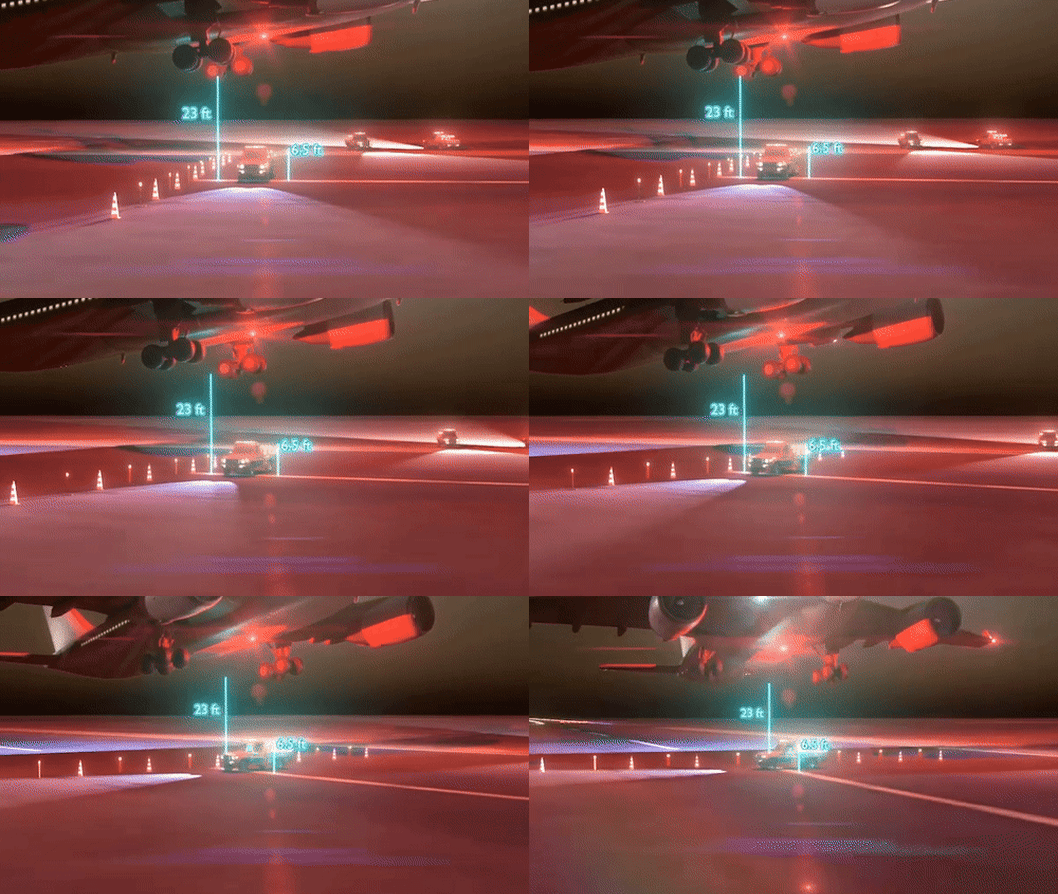
The ATSB said neither the Malaysia Airlines nor Bamboo Airways flight crews had recognised the changed conditions before take-off, despite the warnings being communicated through an update known as a NOTAM (notice to airmen) and broadcast over the radio by the automatic terminal information service.
The Malaysia Airlines flight cleared the work crew by seven metres, while the Bamboo Airways flight passed over by 4.5 metres.

The near misses at Melbourne Airport in 2023.Credit: ATSB
Both times, the jet thrust washed over areas where workers and equipment were present.
When the crew got to the point of take-off, “they knew that they had passed close to lights and workers at the end, but the exact magnitude of that wasn’t apparent to them at the time”, said Mitchell. “And it wasn’t most likely until our interviews with them later that they realised how close.
“Neither flight crew identified that the runway was significantly shortened, despite the relevant NOTAM being provided in their flight briefing packs.”
Commercial planes routinely use what is known as “reduced thrust take-off” that takes advantage of the length of the runway to use less fuel, increasing efficiency and lowering wear on the aircraft. A shorter runway necessitates increased thrust.

Australia’s transport safety inspector says that a failure to sufficiently warn flight crews about take-off conditions nearly led to two major accidents at Melbourne Airport in 2023.Credit: Aaron Francis
The first event involving Malaysia Airlines happened on September 7, 2023. The second occurred on September 18, 2023, with Vietnam’s Bamboo Airways. The runway works ran from 10.30pm at night until 4.30am in the morning.
The Malaysia Airlines crew didn’t confirm they received the ATIS (Automatic Terminal Information Service) notification on the runway, while Bamboo Airways crew had received an earlier version of the update on the runway.
While the two airlines’ office-based flight dispatchers had accounted for the reduced runway length in their calculations, they did not highlight the shortened runway to the flight crews for input into the plane’s flight management computers, said Mitchell.
“Both flight crews assumed the full runway length was available in their performance calculations and their respective take-offs were conducted with less thrust than was needed for the reduced runway.”

CCTV footage of one of the runway overruns.Credit: ATSB
The ATSB investigation found that the “risk controls” in place at the time to prevent occurrences like this were “procedural in nature”.
Whilst pilots are responsible for reviewing and understanding all relevant information when preparing for a flight, “these and previous incidents show that this process is susceptible to human error”.
“Considering the potentially catastrophic consequences of a loaded and fully fuelled aircraft impacting a work site on take-off, additional defensive layers are required,” said Mitchell.
As a result of the 2023 incidents, Airservices Australia, in consultation with the Civil Aviation Safety Authority, are proposing changes to air traffic control procedures for how essential information about runway status is communicated.
The ATSB is also urging the International Civil Aviation Organisation to review procedures for air traffic communication to crews on “safety-critical aerodrome conditions”. ICAO has already adopted rule changes for warnings of temporary changes to runway distances.
Immediately after the first event, Melbourne Airport queried Malaysia Airlines, and then published a safety alert to all airlines.
