


“These charges stem from portions of … Bolton’s personal diaries over his 45-year career – records that are unclassified, shared only with his immediate family, and known to the FBI as far back as 2021,” lawyer Abbe Lowell said in a statement. “Like many public officials throughout history … Bolton kept diaries – that is not a crime.”
The investigation into Bolton, who served for more than a year in Trump’s first administration before being fired in 2019, burst into public view in August when the FBI searched his home in Maryland and his office in Washington for classified records he may have held on to from his years in government.

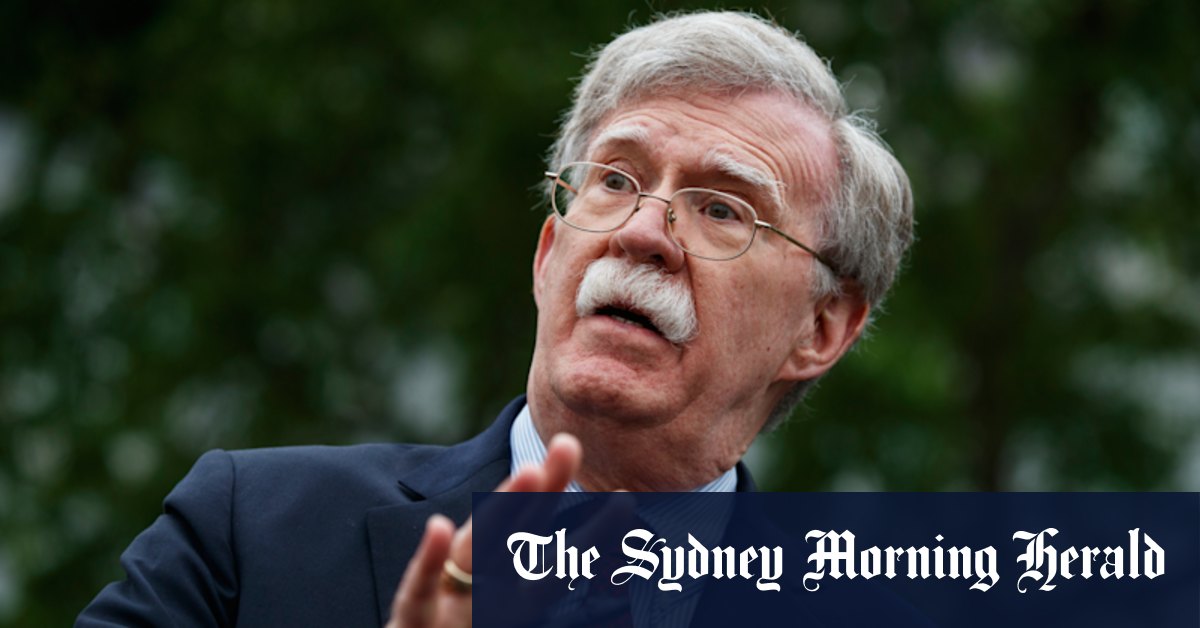
John Bolton listens as US President Donald Trump speaks at the White House in 2018.Credit: AP
Those raids were seeking evidence of possible violations of the Espionage Act, which makes it a crime to remove, retain or transmit national defence records, according to partially unsealed search warrants filed in federal court.
In Bolton’s Maryland home, agents seized two mobile phones, documents in folders labelled “Trump I-IV” and a binder labelled “statements and reflections to Allied Strikes”, according to court documents.
They also found records labelled “confidential”, including documents that referenced weapons of mass destruction, the US mission to the United Nations, and other materials related to the US government’s strategic communications inside his office in Washington, DC, according to court records.
Loading
Court records also show that a foreign entity hacked Bolton’s email account, though details of the hack are redacted. Bolton’s lawyer has previously said that the records the FBI seized were ordinary documents for a former government official to possess.
Trump himself was previously indicted on Espionage Act violations for allegedly transporting classified records to his Florida home after departing the White House in 2021 and refusing repeated requests by the government to return them. Trump had pleaded not guilty, and that case was dropped after he won re-election in November 2024.
The Bolton indictment sets the stage for a closely watched court case centring on a long-time fixture in Republican foreign policy circles who became known for his hawkish views on American power and who, after leaving Trump’s first government, emerged as a prominent and vocal critic of the president.
Though the investigation that produced the indictment was under way during the Biden administration and began well before Trump’s second term, the case will unfold against the backdrop of broader concerns that his Justice Department is being weaponised to go after his political adversaries.
Loading
Agents during the August search seized multiple documents labelled “classified”, “confidential” and “secret” from Bolton’s office, according to previously unsealed court filings. Some of the seized records appeared to concern weapons of mass destruction, national “strategic communication” and the US mission to the United Nations, the filings stated.
The charges follow separate indictments over the past month accusing former FBI director James Comey of lying to Congress and New York Attorney-General Letitia James of committing bank fraud and making a false statement, charges they both deny.
Both those cases were filed in federal court in Virginia by a prosecutor Trump hastily installed in the position after growing frustrated that investigations into high-profile enemies had not resulted in prosecution.
The Bolton case, by contrast, was filed in Maryland by a lawyer who, before being elevated to the job, had been a career prosecutor in the office.
Questions about Bolton’s handling of classified information date back years. He faced a lawsuit and a Justice Department investigation after leaving office related to information in his 2020 book he published – The Room Where it Happened – that portrayed Trump as grossly uninformed about foreign policy.
Loading
The Trump administration asserted that Bolton’s manuscript included classified information that could harm national security if exposed. Bolton’s lawyers have said he moved forward with the book after a White House National Security Council official, with whom Bolton had worked for months, said the manuscript no longer contained classified information.
A search warrant affidavit that was previously unsealed said a National Security Council official had reviewed the book manuscript and told Bolton in 2020 that it appeared to contain “significant amounts” of classified information, some at a top-secret level.
Bolton’s lawyer, Lowell, has said that many of the documents seized in August were approved as part of a pre-publication review for Bolton’s book. He said that many were decades old, from Bolton’s long career in the State Department, as an assistant attorney-general and as the US ambassador to the United Nations.
The indictment is a dramatic moment in Bolton’s long career in government. He served in the Justice Department during Ronald Reagan’s administration and was the State Department’s point man on arms control during George W. Bush’s presidency. Bolton was nominated by Bush to serve as US ambassador to the United Nations, but the strong supporter of the Iraq war was unable to win Senate confirmation and resigned after serving 17 months as a Bush recess appointment.
That allowed him to hold the job on a temporary basis without Senate confirmation.
In 2018, Bolton was appointed to serve as Trump’s third national security adviser. But his brief tenure was characterised by disputes with the president over North Korea, Iran and Ukraine. Those rifts ultimately led to his departure, with Trump announcing on social media in September 2019 that he had told Bolton “that his services are no longer needed at the White House”.
Bolton subsequently criticised Trump’s approach to foreign policy and government in his 2020 book, including by alleging that Trump directly tied providing military aid to the country’s willingness to conduct investigations into Joe Biden, who was soon to be Trump’s Democratic 2020 election rival, and members of his family.
Trump responded by slamming Bolton as a “washed-up guy” and a “crazy” warmonger who would have led the country into “World War Six”. Trump also said at the time that the book contained “highly classified information” and that Bolton “did not have approval” to publish it.
AP, Reuters
Get a note directly from our foreign correspondents on what’s making headlines around the world. Sign up for our weekly What in the World newsletter.
