


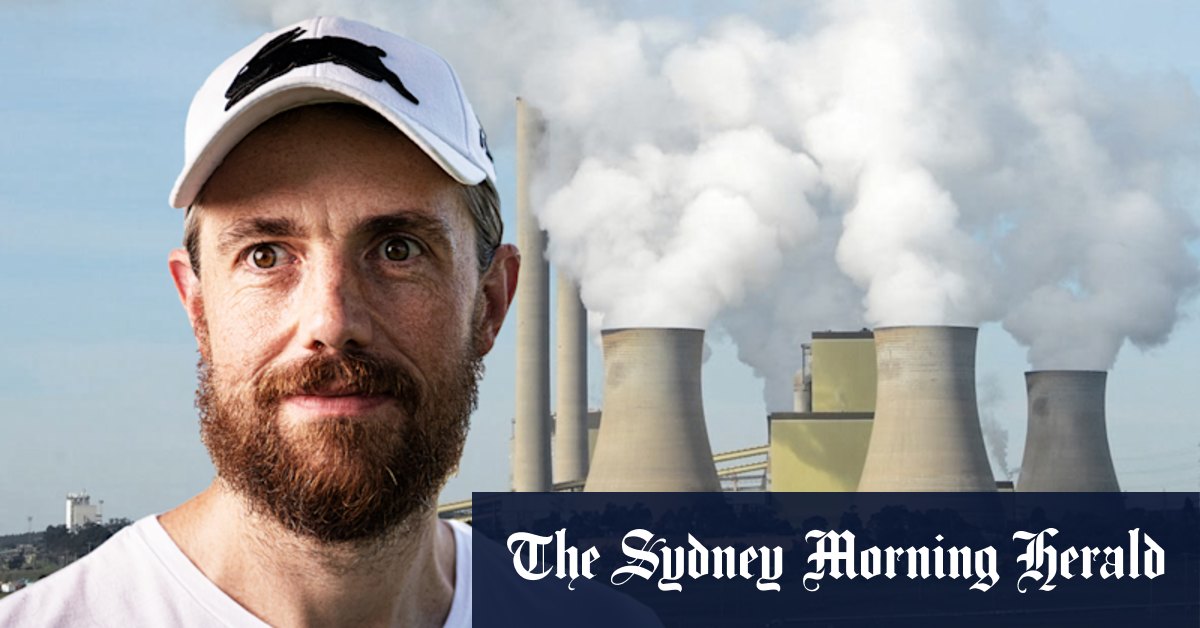
Billionaire investor Mike Cannon-Brookes has reignited his climate battle with AGL, Australia’s biggest polluter, rejecting its latest emissions-reduction strategy as too slow and out of step with what is needed to arrest dangerous global warming.
Cannon-Brookes, the co-founder of tech firm Atlassian and one of the country’s richest people, built a stake of more than 10 per cent in AGL in 2022, before leading a successful push to overhaul its board of directors and extract pledges for faster coal-fired power plant closures and deeper cuts to harmful greenhouse gas emissions.

Mike Cannon-Brookes led a campaign fast-track the closures of AGL’s polluting coal-fired power stations.Credit: Wolter Peeters
The rift between AGL and its biggest shareholder opened again at the energy giant’s annual general meeting on Friday, when Cannon-Brookes defied the urging of the board and refused to endorse its climate change strategy, which he described as inadequate.
His private investment firm, Grok Ventures, said AGL’s commitments were “largely unchanged” from two years ago, and still were not aligned with the international Paris Agreement’s ultimate aim of limiting rising temperatures to 1.5 degrees, the level that scientists say is key to avoiding the worst and most immediate impacts of climate change.
“The plan shows only incremental improvement in ambition when compared with 2022, is not aligned with the Paris Agreement, and still targets net zero by 2050 on a stated 1.8-degree trajectory,” a Grok spokesperson said.
Loading
“We firmly believe a more ambitious path to renewable energy best serves the long-term interests of AGL’s shareholders.”
Cannon-Brookes’ rejection of the climate plan on Friday marks the latest escalation of a campaign that began in 2022 when he amassed a large stake in AGL and fought to scuttle a planned demerger that would have kept the company’s coal-fired power fleet running until well into the 2040s.
AGL, which supplies electricity and natural gas to more than 4 million customers across Australia, is also the nation’s single biggest emitter of harmful greenhouse gases due to its ongoing ownership of two large coal-burning power generators in Victoria and NSW.
