










Victoria’s pandemic construction fast-track program has “failed miserably”, a former senior state planner claims, arguing that billions of dollars in promised economic value and tens of thousands of homes remain trapped in bureaucratic inertia.
The developer of a stalled 3000-home project in Lilydale – which was supposed to be expedited under the scheme – claims these ongoing delays will force future buyers to cover extra costs of up to $600 million.
The Victorian Planning Authority COVID-19 Fast Track Program was launched in 2020 to unlock $18.8 billion in economic activity, 89,200 homes and more than 100,000 jobs. Instead, it produced a pipeline of delayed approvals with limited real-world delivery.
Of the 19 projects assessed, 13 were approved and gazetted, but none met original timelines. Several have stalled, or been deferred or abandoned.
A new analysis by John Luppino, a former Victorian Planning Authority senior planner who now works for the developer Intrapac, said the state’s recovery initiative had fallen well short of its goals.
“If you measure success against the program’s original aim … the program has failed miserably,” the report said.
It found developments were bogged down in complex and fragmented post-approval processes involving multiple government agencies, councils and referral authorities. He noted the Victorian Planning Authority (VPA) lacked the authority to compel other agencies to act or to issue planning permits directly.
“What you really need is a body that has the statutory powers and authority to co-ordinate and corral government authorities to work together and bring projects to shovel-readiness,” Luppino said.
His report, based largely on his time at the agency and work on three of the projects, said in some cases government departments and councils resisted involvement in the fast-track process, which was seen as being imposed on them.
Luppino highlighted the Lilydale Quarry redevelopment as one of the most striking failures to progress. While now working for the project’s developer, he previously worked on it while at the VPA.
The massive site in Melbourne’s outer east, now called Kinley Estate, was conceived more than a decade ago to deliver 3200 homes. Despite being rezoned in January 2022, the quarry remains partially filled and construction has been stalled for years. Some 211 homes have been built so far under an earlier permit covering the first stage.
Intrapac chief executive Max Shifman attributed the delays to poor co-ordination between state agencies, local council and infrastructure authorities, saying they were left “floundering waiting for responses” with no clear time frames. While a permit – first applied for in 2022 – was granted early this year, Shifman said many conditions remained unworkable and needed to be challenged at VCAT.
He estimated the delays would add about $600 million to the cost of house-and-land packages, driven by rising construction costs and the financial burden of holding the site for several years without being able to build.
Shifman said Intrapac’s Lilydale proposal was financially viable and unlike other projects did not require external funding or extensive presales and could start construction this year if given full approvals.
‘If you measure success against the program’s original aim … the program has failed miserably.’
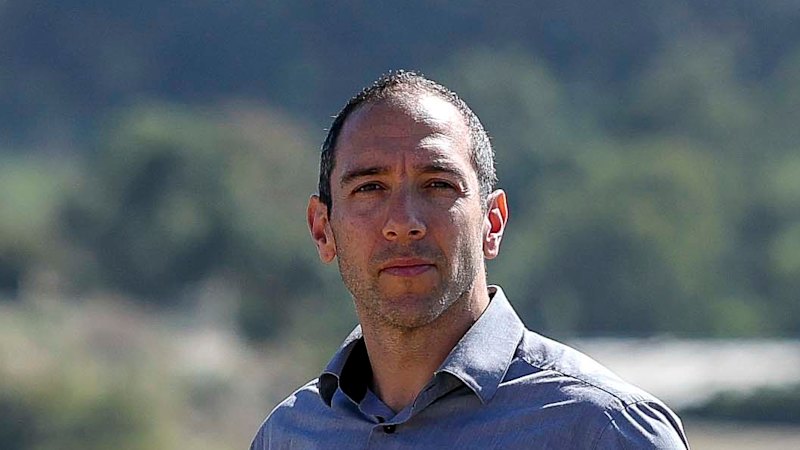
John Luppino, a former Victorian Planning Authority senior planner
“No one cares how much zoning capacity the government has created unless you can actually get shovels in the ground,” he said. “The state needs to report good participants like us that make significant investments and actually help us facilitate rather than be all care and no responsibility.”
Shifman argued that Yarra Ranges Council was ill-equipped to handle such complex approvals and called for a state takeover of the process.
However, the council rejected that characterisation. A spokesperson said that for nearly a decade, it had collaborated with Intrapac to navigate complex geotechnical, heritage and rail corridor constraints.
The spokesperson said part of the reason progress on the remaining 630-lot subdivision had stalled was because the developer submitted applications before mandatory agreements on infrastructure and affordable housing were finalised.
The council said the implications of a “premature application” were made clear to the developer at the time. It added that because the Lilydale rail line bisected the site, the state government mandated specific additional conditions that the council was required to include.
Luppino’s analysis noted that while some greenfield projects had advanced, delays in established areas – such as the Preston Market and Berwick health precincts – were significant.
The Planning Institute of Australia’s Victorian president, Patrick Fensham, said it was important the government got the planning of new precincts right – including those approved under the pandemic fast-track program – noting it was sometimes inevitable that aligning the views of multiple agencies took time.
“Sometimes there are unforeseen delays getting the relevant information, and sometimes that does come from the developer themselves,” he said.
However, Fensham said the government could do more from a strategic perspective to fund and co-ordinate infrastructure in a timely and transparent manner once planning of new precincts was complete.
The VPA was absorbed into the Department of Transport and Planning last year, a move Luppino said further weakened it.
He argued the Development Facilitation Program – which allows the minister to bypass councils – should be expanded to compel faster agency approvals and include projects beyond high-density builds, which are currently less financially viable.
Luppino said the government currently prioritised “headline grabbing” approvals rather than those likely to deliver housing in the short term.
Property Council Australia Victoria executive director Cath Evans said the long-term results of the VPA’s fast-track program showed how much red tape was slowing down the delivery of much-needed homes.
“At a time of housing shortages and economic pressure, Victoria cannot afford for projects of this scale to remain stuck in the system,” she said.
Evans called on the government to expand the powers of the Development Facilitation Program and the removal of redundant referral processes.
A spokesman for Planning Minister Sonya Kilkenny said Victoria continued to build thousands more homes than any other state.
“Many of the precincts the VPA has planned for in the last two decades were always expected to take up to thirty years to deliver,” he said.
David Hayward, an emeritus professor of planning and economics at RMIT University, said the results of the VPA’s COVID-19 program revealed ongoing tensions and contradictions in the planning system as the government proceeded with its fast-track agenda.
“Across NSW and Victoria, the changes to planning systems to speed up approvals don’t seem to be producing the completions we’re expecting of them – and there’s a lot of unhappiness around the quality of what has been delivered,” he said.
Start the day with a summary of the day’s most important and interesting stories, analysis and insights. Sign up for our Morning Edition newsletter.


